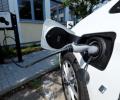
While traditional automakers in India are reeling under a global shortage of semiconductors, the country's electric vehicle (EV) makers, too, are now facing a shortage of lithium-ion batteries, a key raw material. The soaring prices of metals like lithium, nickel and cobalt, which are the primary constituents of the cell, as well as supply chain bottlenecks, are also pushing up the cost of batteries. Battery manufacturers say that prices have been increasing every quarter since the beginning of 2021.

South Korean automaker Kia Motors says it will look to be a premium only brand and stay away from the entry level segment like sedans and hatchbacks. Hardeep Singh Brar, the company's India Vice-President and Head (Sales and Marketing), said that customers have accepted Kia as a premium brand. In the mass market Kia is considered to be the most premium brand. "Customers like the features and they are willing to pay for them. So, we have consciously decided that if customers like us a premium brand, let's stick to that. It is a conscious decision to stay premium and operate in that segment of the mass market," Brar said.
'Everyone says never waste a crisis.' 'When we went into Covid and we were in total lockdown, we were at work.' 'The planes were not flying and we wondered what to do.' 'We looked at each of our performance metrics -- what are customers complaining about, how do employees feel, how do investors feel?'
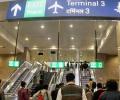
With better utilisation of slots, foreign flying rights, and greater international connections, the operator of India's largest airport feels a privatised Air India will bring commercial benefit to Delhi airport and help it revive quicker from the pandemic shock. Delhi is the largest hub for Air India, with most of its long-haul flights to the US and Europe being operated from here. The airport plans to give its most modern terminal 3 (T3) exclusively to the Tata Group.
India's largest carmaker, Maruti Suzuki India (MSIL), is focused on getting 50 per cent of its customers' car-financing transactions executed through its Smart Finance platform by next year. Shashank Srivastava, executive director-sales, MSIL, said this will help the company turn its website into a single-window channel through which customers can select their models, find dealers, and arrange financing. He said there is a likelihood that 100 per cent of its customers availing of financing will take it through Smart Finance. To date, the company has disbursed Rs 6,500-crore loans via Smart Finance to around 100,000 customers, accounting for 28 per cent of all finance-based car-purchase transactions for the company.
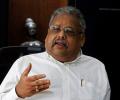
In the season of aviation action, Rakesh Jhunjhunwala-backed Akasa Air has secured the crucial no-objection certificate (NoC) from the civil aviation ministry. It expects to start operations next summer. The airline will now have to apply for the Directorate General of Civil Aviation for operations permit. Aviation sector has been in the limelight with the Tata Group winning the Air India bid last week.

'It is going to be extremely rapid and anybody who is not there, be it investor, manufacturer, supplier, will miss out.'
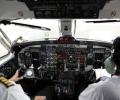
Ahead of two crucial audits, the Ministry of Civil Aviation (MoCA) has proposed to allow deputy director generals (DGs) and officers of Indian Air Force (IAF) to apply for the post of chief of India's aviation regulator. The current head of the Directorate General of Civil Aviation (DGCA), Arun Kumar, has been promoted as secretary and is expected to move out some time soon. DGCA has four Deputy DGs with experience in different fields of aviation.
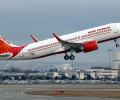
In order to gauge the financial impact of COVID-19 on the aviation industry, comparing it to what happened after the 9/11 terrorist attack is a helpful yardstick.

India's biggest car maker Maruti Suzuki said on Tuesday that its vehicle production in September will tumble by 60 per cent due to chip shortage. The company, which had earlier cut down production at its Gujarat plant, said the chip shortage will hit production in Gurugram and Manesar plants, effectively forcing the automaker to cut production by 60 per cent. Owing to a supply constraint of electronic components due to semiconductor shortage, the company is expecting an adverse impact on vehicle production in September in both Haryana and its contract manufacturing company, Suzuki Motor Gujarat Pvt Ltd. (SMG) in Gujarat.

India's first home-grown mapping company MapMyIndia is looking to list in the public market by raising around Rs 1,200 crore at a Rs 6,000-crore valuation. Sources said the company is ready with its draft red herring prospectus documents and is likely to file as early as next week. While the money will be used for business expansion, it will also give MapMyIndia's early investors, including Qualcomm, PhonePe, and Japanese mapmaker Zenrin Co., a chance to exit. The Verma family, which founded the company, will continue to remain promoters.

In a rare face off, captains of the auto industry have hit out at the government for not walking the talk. At an industry event in the capital on Wednesday, R C Bhargava, chairman of India's largest carmaker Maruti Suzuki, and Venu Srinivasan, chairman of TVS Motor, questioned the government's intent to support the auto sector. Revenue secretary Tarun Bajaj sat in the audience listening, before his turn came to counter them.

The central government has agreed in-principle to Air India employees' main demands. It fears an industrial dissension now could impede the process of privatisation. It has agreed to bear the cost of liquidation loss on account of transfer to the Employees' Provident Fund Organisation (EPFO) from company-owned trusts, inclusion of employees in the central government health scheme (CGHS), and encashment of leaves. The template of the Air India process will be followed for other public sector undertakings up for privatisation at a later date.

SpiceJet, India's second-largest private airline, kicked off the process of hiving off its logistics business to its subsidiary SpiceXpress as it looks to raise much-needed capital. On Tuesday, the company sought its shareholders' approval to complete the process and to raise up to Rs 2,500 crore via a qualified institutions placement (QIP). It is in talks with multiple private equity investors as it tries to sell shares in the logistics arm to raise money.
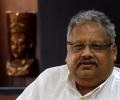
Rakesh Jhunjhunwala-backed new airline Akasa is in talks with US aerospace company Boeing for buying up to 100 737 Max aircraft. Former Jet Airways CEO Vinay Dube and his family members are promoters while ex-IndiGo president Aditya Ghosh is a board member of the airline. The airline is in negotiation with Boeing and has reached out to the government to recertify the aircraft which has been grounded since 2018 after two crashes killing 349 persons, according to sources in the know.

With growing revenues, a spreading business empire, and surging aspirations, companies are seeing a strong demand for luxury products from Tier 2 and Tier 3 cities.
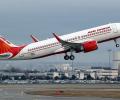
Tata Sons has started the process of due diligence of state-owned Air India and its subsidiary Air India Express. Sources said the group has appointed Bain and Company and Seabury Group for this purpose. Once complete, a financial bid will be submitted and a deal to take over the airline is likely to fructify by end of this year or even earlier, people involved in the process said. Simultaneously, the group has brought in veterans in the aviation business from Delta and United Airlines to prepare a plan for post-merger integration of Air India with its existing airline ventures. Tata Sons operates Vistara - a 51:49 percent joint venture with Singapore Airlines and Air Asia India, in which Tatas hold 83.67 per cent stakes.
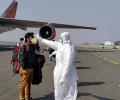
A free and open aviation market, where the government keeps the interest of consumers higher than saving any airline.
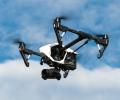
While there were concerns about the security aspect of drones, top government officials were of the view that restricting the drone industry would stifle a sunrise sector which holds significant promise for future, reports Arindam Majumder.
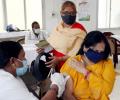
With the threat of a third Covid-19 wave looming large, companies are scrambling to protect employees and keep operations safe--from a no-jab-no-entry-at-workplace policy to ramping up vaccination, it's an all-out effort to prevent the scale of devastation seen in the first two waves. At least two top steel companies--Tata Steel and ArcelorMittal Nippon Steel India (AM/NS India)--are pushing for vaccination certificates for entry into work premises. AM/NS India, a joint venture between world's leading steelmaker, ArcelorMittal, and Japan's Nippon Steel, is set to make vaccination the certificate a requirement from July 1.
